

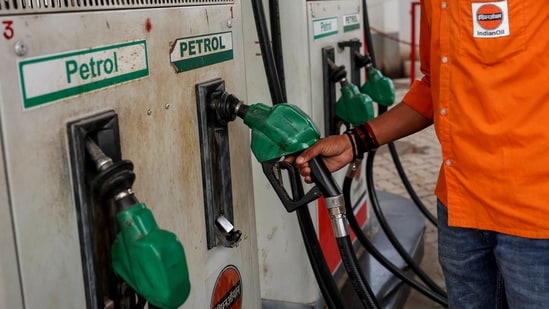
The Indian government has restricted industrial, commercial and institutional users from buying petrol and diesel from petrol pumps and instead asked them to source their requirements from bulk sale points. The Ministry of Petroleum and Natural Gas, on June 11, issued the Motor Spirit and High Speed Diesel (Temporary Regulation of Supply through Retail Outlets) Order, 2026, directing fuel retailers and oil marketing companies to curb bulk fuel purchases from retail outlets for periods of up to 90 days at a time.
This restriction follows abnormal demand growth, particularly that of diesel, in some pockets after bulk users started buying fuel from fuel stations due to the pricing difference. While diesel at fuel stations costs ₹95.20 a litre in Delhi, bulk sales are priced at ₹134.50. The move comes in an attempt to prevent local shortages, amid disruptions to global supply chains due to the ongoing conflict in the Middle East.
According to the directive, the retail fuel stations can sell up to 200 litres of diesel per customer or vehicle on a single day. The government said restrictions were necessary to ensure equitable availability of petrol and diesel across the country, prevent diversion and hoarding, and maintain uninterrupted fuel supplies at fair prices.
How will this restriction impact vehicle owners?
With this restriction, the average passenger vehicle and two-wheeler owners across India are unlikely to be impacted. The average fuel tank size for passenger vehicles in India is between 35 litres and 60 litres. On the other hand, the average fuel tank size for two-wheelers in India ranges from 8 to 14 litres, with the typical commuter motorcycle holding about 10 liters. This means the passenger vehicle owners or two-wheelers should not be worried about this restriction. However, in some fuel stations across India, there have been reports of fuel rationing, but those are mostly localised cases.
With the restriction of up to 200 litres of diesel per vehicle on a single day in place, some commercial vehicle owners might face challenges. The fuel tank sizes for commercial vehicles in India vary drastically based on usage, with trucks typically ranging from 160 to 600 litres, and buses ranging from 70 to 600 litres.
The small commercial vehicles usually come with an average fuel tank size of 10 to 60 litres, while the medium commercial vehicles, like six to eight wheelers, come with an average fuel tank size between 160 and 375 litres. The heavy commercial vehicles like 10 to 14 wheelers, which are commonly used for regional cargo transport and construction, come with an average fuel tank size between 200 and 455 litres. The multi-axle vehicles and tractor-trailers, like 16 to 22 wheelers, which are used for interstate or long haul logistics, generally have a fuel tank size between 365 and 600 litres.
Among the buses, the mini buses or vans like 15-30 seaters have 70 to 125 litre capacity fuel tanks, while standard city and staff buses like 30-50 seaters have 120 to 160 litre capacity fuel tanks. The intercity, luxury, and sleeper coaches have 350 to 600 litres capacity fuel tanks.

